
The Science of the Void
No yeast at all. Just steam, gluten, and a perfectly timed reaction.
Choux pastry is one of those doughs that feels almost impossible: four humble ingredients - water (or milk), butter, flour, and eggs - turn into golden, feather-light shells with a perfectly hollow center. No yeast, no baking soda. Just science, technique, and a generous amount of patience. And yet, for nearly five centuries, this dough has been one of the foundations of great pastry.
If you think about it, it is a small miracle of physics. A dense, heavy dough that puffs up in the oven like a balloon, creating a perfect empty space inside.
How is that possible?
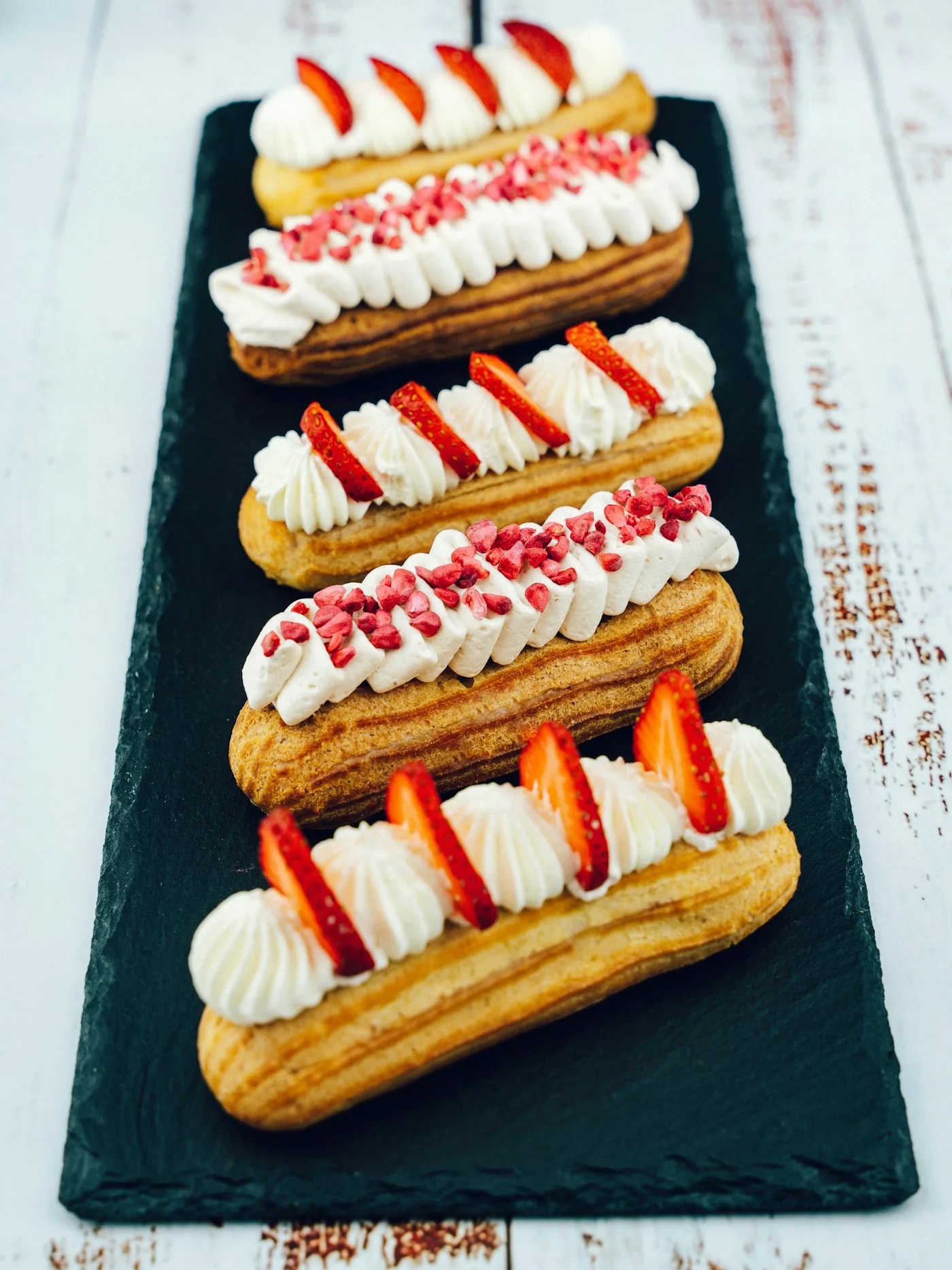
The secret is the double cooking process. First on the stove, where the flour gelatinizes in the boiling water and forms a network of starch and gluten - the so-called panade. Once cooked, it is left to cool slightly and the eggs are incorporated one at a time into the still-warm dough: this stage determines the final consistency. Then it goes into the oven, where the steam released by the eggs expands the dough from the inside and creates that signature hollow center.
The dough that rises on its own
Choux pastry does not forgive sudden changes: balance, heat, and patience make all the difference.
How it works
Three forces in perfect balance
As it bakes, the water in the eggs turns into steam and creates internal pressure. The butter in the dough forms a protective barrier that keeps the steam from escaping. The dough expands from within, the walls set, and a perfect cavity is left behind for filling.
Gelatinization
The flour cooks in the boiling liquid. The starches swell and build the body of the dough.
Expansion
In the oven, the water from the eggs evaporates. The steam is trapped by the butter and pushes the walls outward.
Structure
The proteins in the eggs coagulate and set the shape. The walls become crisp and golden.
Three Souls, One Dough
Heavy, medium, light. There is not just one choux pastry: there is the right one for each creation.
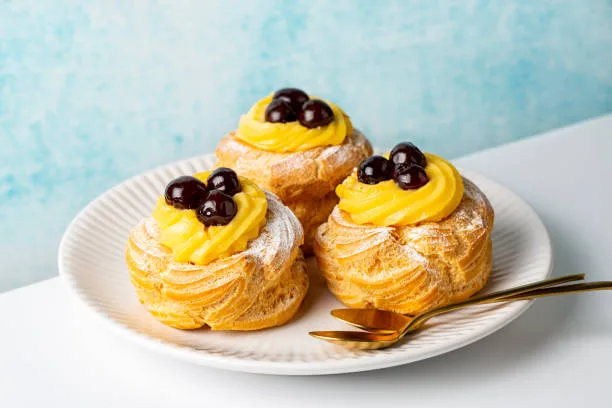
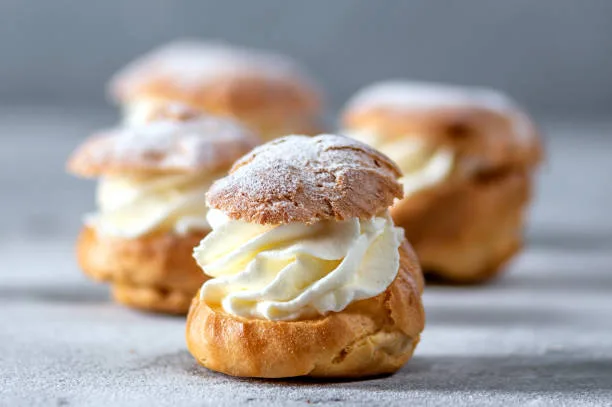
This is where it gets interesting - and it is the point that very few people really know. Choux pastry is not a single dough: it is a family of doughs that differ in the ratio of flour, butter, and liquid. Change those proportions and you completely change thickness, crispness, volume, and use.
The principle is simple: everything depends on the flour. If the flour is greater than the butter, the dough is heavy; if it matches the butter, it is medium; if it is lower, it is light.
Heavy
Heavy doughs
Medium
The classic
Light
Light doughs
The golden rule
- For frying = heavy dough (otherwise it absorbs too much oil).
- For oven-baked choux meant to be eaten right away = light dough (extra crisp).
For everything else, medium dough is the safest choice. And remember: heavy doughs bake at 180°C, while light doughs bake at 220°C. Never mix them up.
The Perfect Recipe
Medium dough - the classic base for cream puffs, eclairs, and profiteroles.
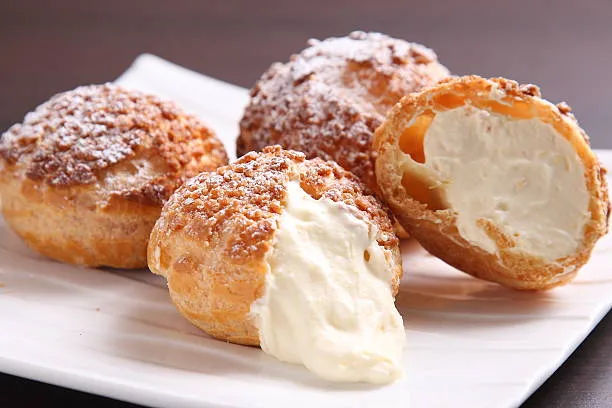
Now I am sharing my medium choux pastry recipe, the one I use for my eclairs and classic cream puffs. It is a starting point, but feel free to experiment with the proportions until you find your ideal version. Choux pastry is a forgiving dough in some ways, but remember: every gram matters.
Classic choux pastry
Medium dough · ~50 cream puffs · 45 min
Ingredients
- Water / Milk500 ml
- Butter500 g
- Flour W 200-230500 g
- Medium eggs1030 g
- Salt2 g
- Sugar2 g
Method
- Bring the water, butter, salt, and sugar to a boil in a saucepan. The butter must be completely melted before the liquid reaches a boil.
- Remove from the heat and add the flour all at once. Stir vigorously with a wooden spoon until you get a smooth dough that pulls away from the sides.
- Return to low heat for 1-2 minutes, stirring constantly: you need to dry the dough slightly. A thin white film will form on the bottom of the pan, which is your sign that it is ready.
- Transfer to a mixer bowl or regular bowl. Let it cool slightly, then add the eggs one at a time, making sure each one is fully incorporated before adding the next.
- The dough is ready when it looks glossy, falls from the spatula in a ribbon, and forms an upside-down "V". It should be neither too stiff nor too loose.
- Transfer to a piping bag fitted with a plain tip. Pipe the choux onto a lined baking tray, leaving space between each one. Bake at 200°C static for 20-25 minutes. In the last 5 minutes, open the oven slightly.
Treat it well and it will reward you with versatility and reliable results. Choux pastry practically does the rest on its own.